Indigenous civilizations
Communities including Kpelle, Bassa, Kru, Grebo, Vai, Gola, Kissi, Lorma, Mano and others developed rich systems of trade, farming, language, governance, and culture across the region.
Republic of Liberia
A nation shaped by independence, African diplomacy, cultural strength, democratic renewal, and a new era of global leadership.
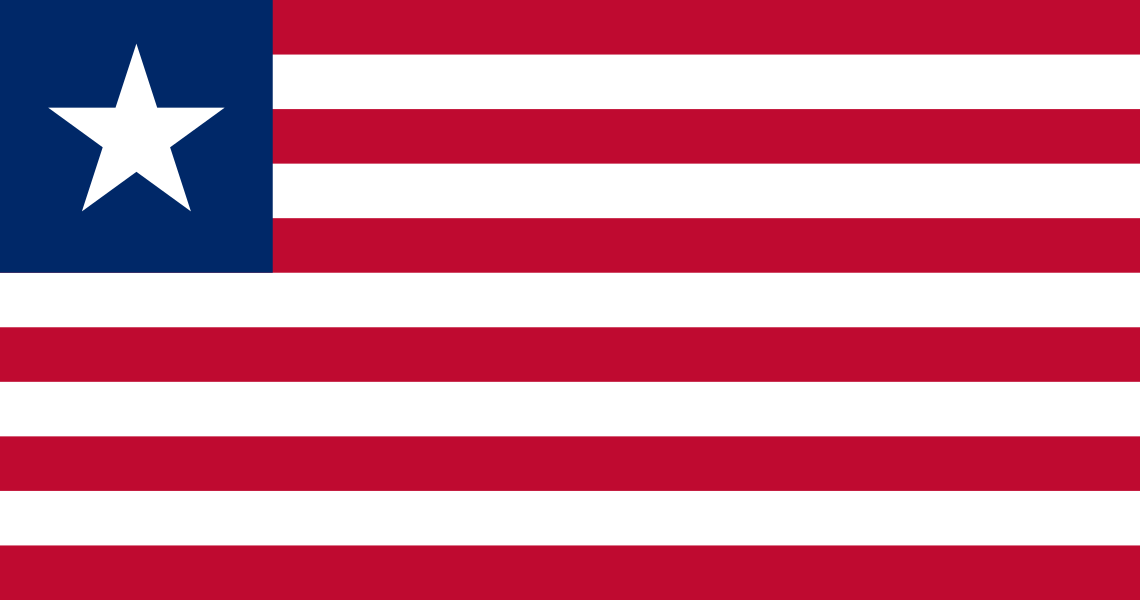
Why “Lone Star of Africa”? Liberia’s lone star reflects the country’s historic identity as an independent African republic. Long before the great wave of African decolonization, Liberia already had a sovereign voice in international affairs and used that voice in support of African self-determination.
A Brief History
Liberia’s history includes ancient Indigenous societies, Atlantic-era migration, the creation of the modern republic, regional diplomacy, civil conflict, peacebuilding, and democratic recovery.
Communities including Kpelle, Bassa, Kru, Grebo, Vai, Gola, Kissi, Lorma, Mano and others developed rich systems of trade, farming, language, governance, and culture across the region.
Settlements of free Black Americans and formerly enslaved people grew along the coast alongside long-established Indigenous communities. Liberia declared independence on July 26, 1847.
As a sovereign African state at the founding of the United Nations, Liberia participated in the global debate over colonialism and supported the principle that colonized peoples should determine their own political future.
Two devastating civil wars caused immense loss and displacement. The 2003 peace agreement opened the way for disarmament, reconstruction, institution-building, and national recovery.
Liberia held four post-war presidential elections—in 2005, 2011, 2017, and 2023—and achieved peaceful democratic transfers of executive power.
Liberia serves as an elected non-permanent member of the UN Security Council, returning to the body after its earlier service in 1961.
Liberia & the United Nations
In 1960, Liberia voted in favor of UN General Assembly Resolution 1514, the landmark Declaration on the Granting of Independence to Colonial Countries and Peoples. The resolution affirmed self-determination and called for colonialism to be brought to an end.
In 2026–2027, Liberia is again serving as a non-permanent member of the UN Security Council. Under the Council’s monthly rotation, Liberia will hold the Security Council presidency in December 2026.
The Security Council presidency rotates monthly among Council members in English alphabetical order.
Where Liberia Stands
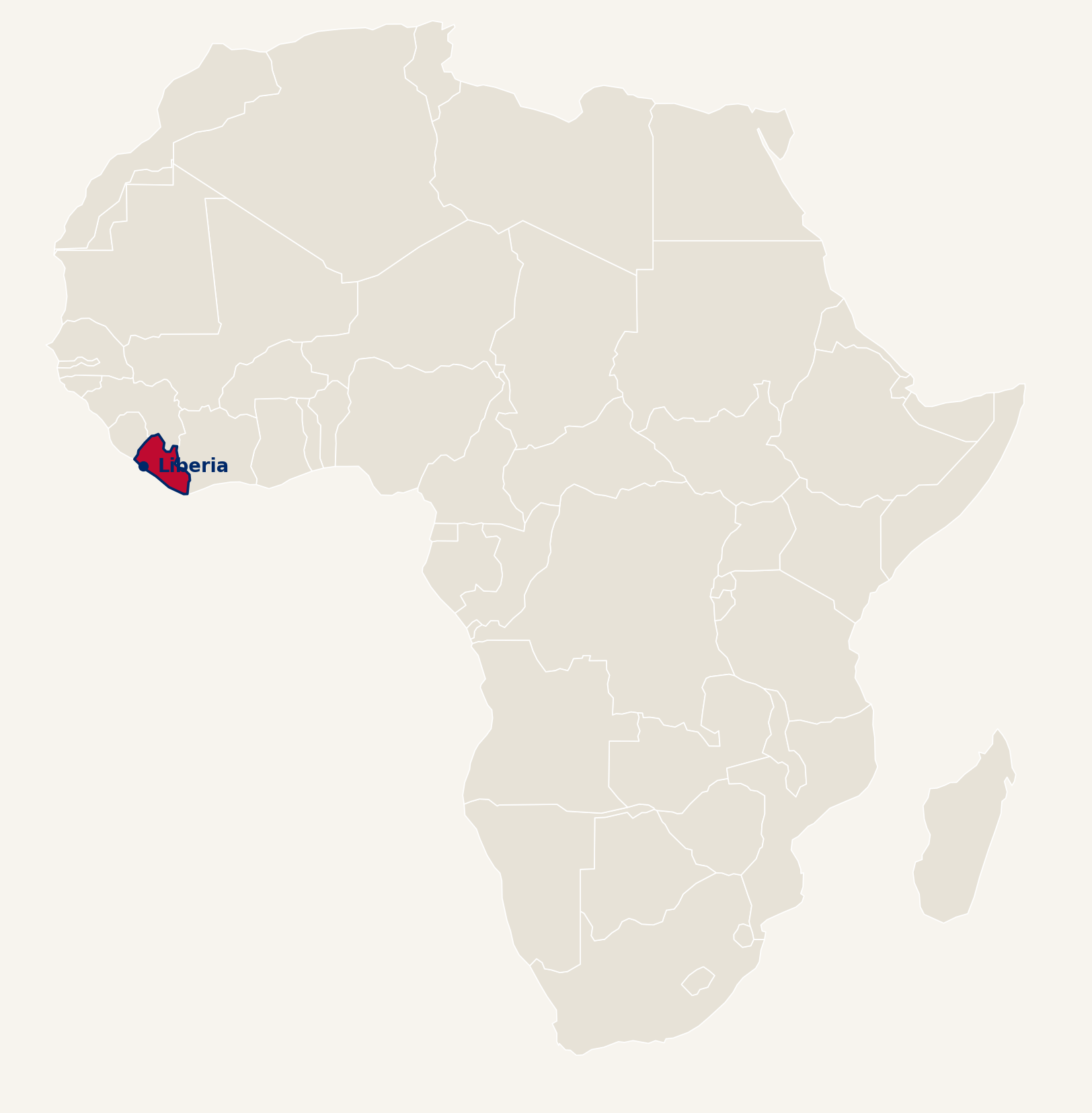
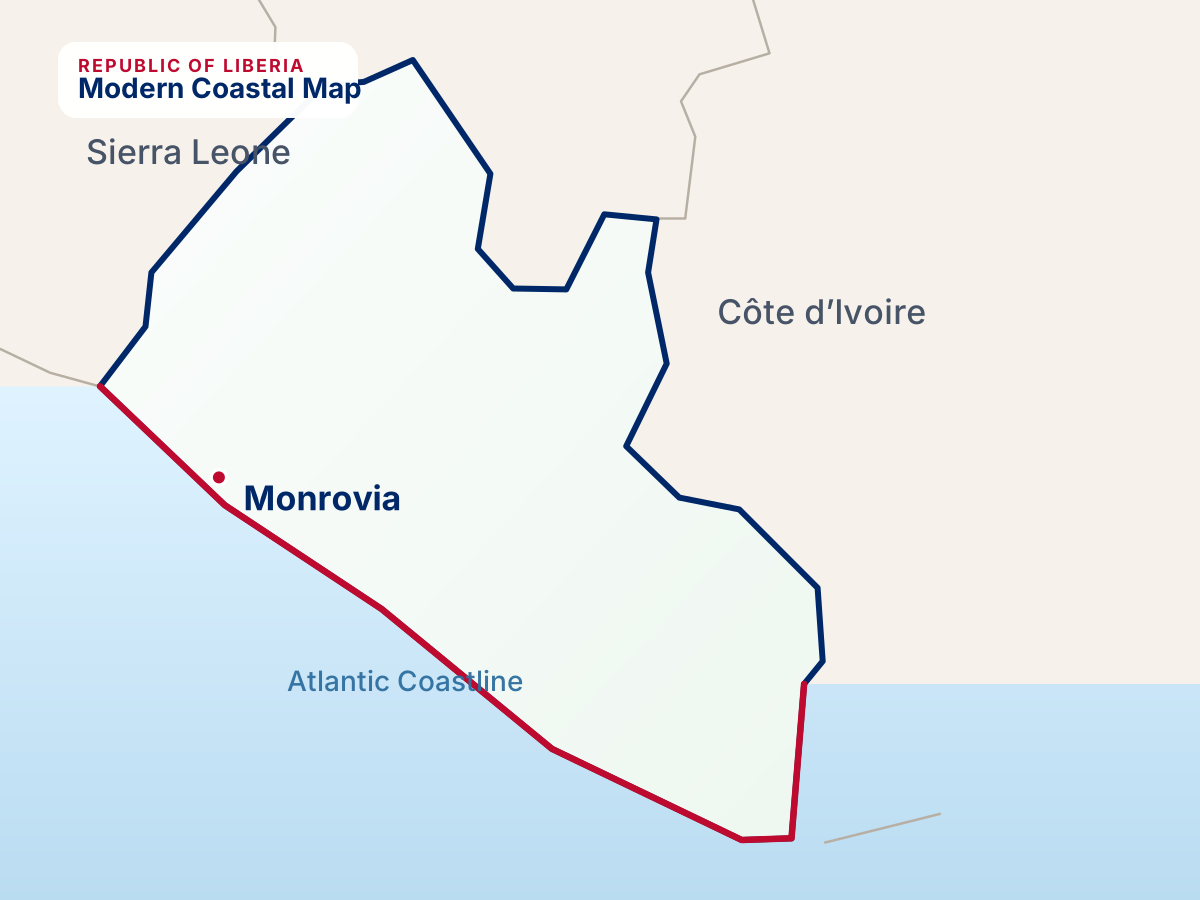
Liberia is located on the Upper Guinea Coast of West Africa, bordered by Sierra Leone, Guinea, Côte d’Ivoire, and the Atlantic Ocean.
Culture
Liberian culture reflects Indigenous traditions, the Americo-Liberian experience, regional West African connections, and a vibrant modern identity. Music, storytelling, dance, textiles, masking traditions, craftsmanship, food, faith, and community celebrations all form part of the country’s cultural life.
Rice is a major staple. Popular dishes and ingredients include cassava, plantain, palm butter, potato greens, jollof-style rice, fresh and smoked fish, pepper sauces, and locally grown vegetables.
English is the official language, while many Liberians speak Indigenous languages and Liberian English varieties that reflect the country’s diverse communities.
Vegetation & Environment
Liberia lies within one of West Africa’s most important tropical forest regions. Its landscapes include evergreen and semi-evergreen forest, secondary forest, wetlands, mangroves, coastal vegetation, agricultural land, and upland areas.
These ecosystems support biodiversity and livelihoods while creating opportunities for conservation, climate-smart agriculture, ecotourism, and sustainable forestry.
Government
Liberia is governed under the 1986 Constitution through executive, legislative, and judicial branches.
The President serves as head of state and head of government. As of 2026, the President is Joseph Nyuma Boakai, Sr., with Jeremiah Kpan Koung serving as Vice President.
The national Legislature is bicameral, consisting of the Senate and the House of Representatives.
The judicial branch is headed by the Supreme Court, with lower courts forming the rest of the national judicial system.
Liberia is divided into 15 counties, with Monrovia in Montserrado County serving as the national capital and largest urban center.
The People of Liberia
Liberia is home to more than five million people and a broad range of ethnic, linguistic, religious, and regional communities. The country recognizes 16 Indigenous ethnic groups, each with its own history and language traditions.
Liberians at home and across the global diaspora contribute to education, business, science, public service, agriculture, technology, the arts, health care, and national reconstruction.
“The Lone Star is more than a symbol of the past. It can also represent a shared responsibility to build a peaceful, educated, productive, and globally connected Liberia.”
Liberia Today
After years of conflict, Liberia continues the long work of strengthening institutions, expanding infrastructure, improving education and health care, creating jobs, modernizing agriculture, protecting natural resources, and connecting its young population to a digital economy.
Building skills for science, technology, agriculture, engineering, entrepreneurship, and public service.
Roads, power, ports, telecommunications, housing, water, and resilient public systems.
Moving from subsistence production toward value chains, processing, food security, and export growth.
Deepening accountable government, peaceful political competition, justice, and public trust.
LonestarofAfrica.com
History. Culture. People. Democracy. Nature. Opportunity. Global leadership.